


Gugu Gaga: Keyboard Escape
Goldoint
Gugu Gaga: Keyboard Escape is a small survival simulation game from Goldoint that places its entire appeal in a simple idea: stay moving, react quickly, and avoid whatever is chasing you. I approached it as a short-session mobile game rather than a deep management simulator, and that expectation matters. Its store summary points to running, jumping, and escaping the “brainrot” alongside Gugu Gaga, while the short description is simply “Gugu Gaga.” That makes the game’s identity clear in mood, but leaves the actual experience to be discovered through play.
My first impression is that this is aimed at players who enjoy immediate action more than long tutorials or complicated menus. You are not coming to it for a large story campaign or a detailed simulation model. The attraction is the pressure of movement: watching the screen, choosing when to run, and timing jumps before a mistake ends the attempt. The best way to judge it is as a focused escape game with simulation-style presentation, not as a full-scale simulator.
It is free to play, carries an Everyone age rating, and requires Android 8.1 or later. The current version is 0.0.5, so I would treat it as an early, compact release rather than a fully mature game with years of refinement behind it. That does not automatically make it a poor choice, but it does change what I expect from the amount of content, polish, and long-term variety.
How the escape loop feels in everyday play
The central loop is easy to understand: run, jump, and try to survive. That simplicity is useful on a phone because I can pick it up without having to remember a complicated control scheme. A quick attempt fits naturally into a spare moment, such as waiting for a bus or taking a short break between tasks. I do not need to reserve a long uninterrupted session to understand what I am supposed to do.
That accessibility also creates the game’s main challenge. When the rules are straightforward, the quality of the timing becomes much more important. A jump is not interesting merely because the character leaves the ground; it becomes interesting when I have to decide whether to act immediately or hold back for a better opening. The pressure comes from turning a small set of actions into consistent decisions.
Related News






I found that the most useful mindset is to treat each attempt as practice rather than as a personal test of reflexes. Early mistakes show where my attention failed: sometimes I reacted too late, while other times I moved too quickly and created a problem for myself. That distinction matters because an escape game can feel unfair when every failure seems random. Paying attention to the moment before a mistake helps reveal whether the issue is timing, positioning, or simply rushing.
For a realistic everyday scenario, imagine opening the game after dinner when you want something active but not demanding. One or two attempts can provide a quick burst of concentration without the commitment of a long multiplayer match. If I am already tired, however, the same pressure can become irritating. A game built around escaping does not offer much relaxation when I am looking for a calm, low-attention experience.
The “brainrot” theme gives the presentation a deliberately playful tone. It is not trying to sound serious or realistic, and that helps separate it from more traditional survival games. Gugu Gaga’s appeal is likely strongest for players who enjoy absurd internet-style humor and simple character-driven chaos. If that style feels annoying rather than funny, the basic running and jumping may not be enough to carry the whole experience.
Gallery
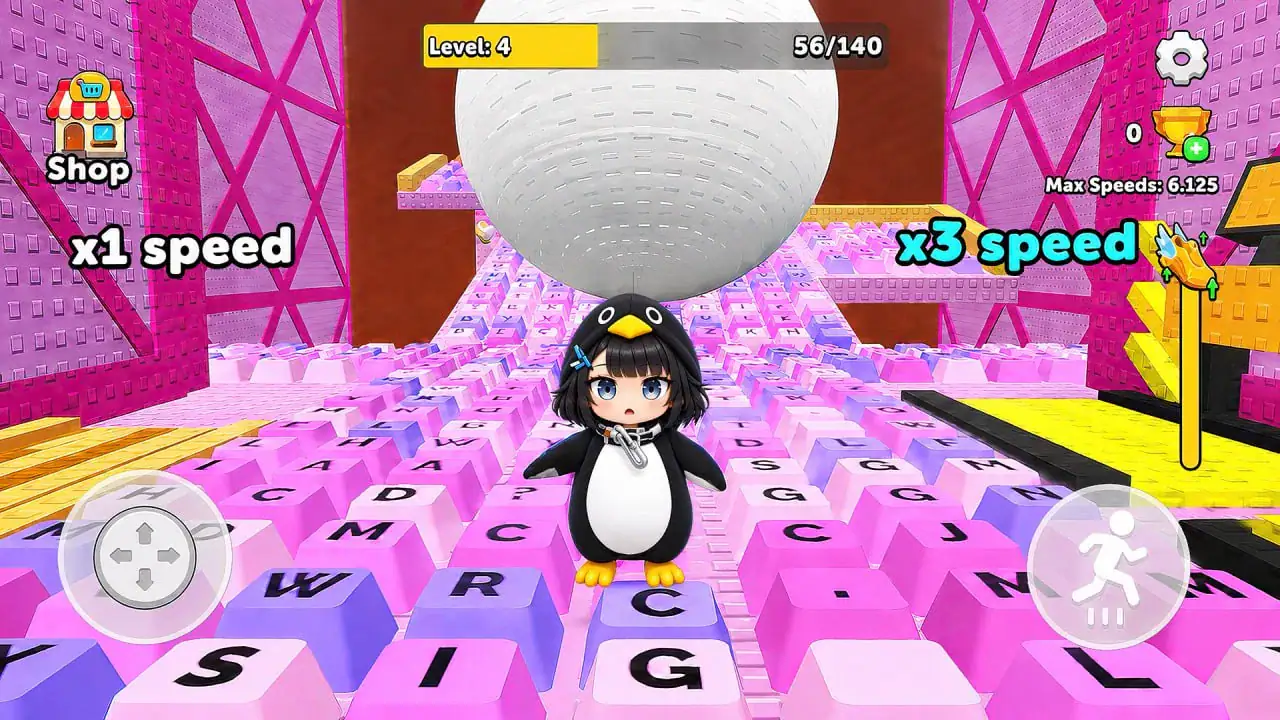
Where progress becomes pressure
Because the game is built around survival attempts, progress is best understood through improved execution. I become better by recognizing danger sooner, keeping a steadier rhythm, and avoiding panic. This is a different kind of progression from unlocking a large skill tree or building a permanent settlement. The reward is the feeling that the next attempt is more controlled than the previous one.
That design can be satisfying for players who like mastery, but it can also feel thin for anyone expecting a long-term progression system. I would not choose this game if my main reason for playing is collecting equipment, developing a character over many chapters, or managing a growing simulation. The category label may suggest simulation, yet the moment-to-moment experience is much closer to a light reflex survival challenge.
One practical tip is to avoid treating every jump as an emergency. In games with constant pursuit, the instinct is to press the action as soon as danger appears. A better approach is to watch the rhythm of the scene and use the jump when it solves a specific obstacle. This reduces unnecessary inputs and makes failures easier to understand. It is a small adjustment, but it turns frantic tapping into deliberate play.
Another useful habit is to separate learning sessions from score-chasing sessions. During the first few attempts, I focus on discovering how the movement responds and where the danger tends to appear. Only after that do I try to extend a run. This keeps the game from feeling like a sequence of unexplained defeats and gives each attempt a purpose.
That approach also exposes a trade-off in the design. A compact game can be welcoming because it does not bury the player under systems, but the same compactness may limit the reasons to return. If the available situations do not change enough, improvement can eventually become repetition. Players who enjoy polishing one skill may be happy with that arrangement; players who need frequent new objectives may lose interest sooner.
Fairness, spending, and the free-to-play question
The game is available for free, which makes it easy to try without committing money first. That is a meaningful advantage for a small title, especially when the store description is brief and a player may not know whether the unusual theme will appeal to them. I can test the controls and tone directly instead of making a purchase based only on a few words.
When I think about fairness, I look first at whether success appears to come from reading the situation and timing actions rather than from spending. For this game, the core appeal is the escape challenge itself. A fair experience should let a player understand why an attempt ended and improve through practice. That is the standard I would apply here: if a failure teaches me something, the pressure feels purposeful; if it feels arbitrary, the short loop loses much of its value.
I would not assume that free means completely frictionless. Free games can still include interruptions or optional spending in ways that affect the rhythm of play. Since those details are not part of the confirmed product facts available here, I would check the current in-game purchase and advertising screens before making a final decision about long-term use. That is not a criticism of Goldoint; it is simply sensible when evaluating any free mobile game.
For families, the Everyone rating makes the game easier to consider than a title built around mature themes. Still, an age label does not tell me whether the pace, repeated failure, or chaotic presentation will suit a particular child. Younger players may need help understanding that restarting is part of the design rather than a sign that the device is malfunctioning. Adults who want a harmless, silly action break may find the tone more appealing than players seeking a serious survival atmosphere.
The competitive fairness question is also important even without assuming a formal leaderboard or multiplayer mode. If I am competing with my own best attempts, spending should not be the deciding factor. The meaningful advantage should come from better observation and control. If someone is looking for a social competition game where friends compare detailed rankings, this may not be the right first choice; the confirmed description emphasizes the individual escape premise rather than a broad competitive system.
Who should play, and who should skip it
I would recommend Gugu Gaga: Keyboard Escape to someone who wants a quick mobile challenge with a strange, playful identity. It suits players who enjoy repeating short attempts, refining their timing, and laughing at an intentionally silly theme. It is also a reasonable option for people who dislike long onboarding sequences and want to understand the basic objective almost immediately.
I would be more cautious about recommending it to someone who expects a rich simulation. The game’s listed category may attract players looking for construction, resource management, or detailed decision-making, but the confirmed premise centers on movement and survival. If you want to design a city, care for a complex virtual world, or make choices that unfold over a long campaign, a traditional simulation game will probably serve you better.
It is also not the ideal choice for players who dislike repetition. Escape games often ask the player to retry the same broad challenge until the timing becomes reliable. That can be rewarding when I feel my skill improving, but it can feel monotonous when I want fresh environments or a strong story between attempts. The game’s small version number reinforces my decision to approach it with modest expectations about breadth.
Device compatibility is straightforward: Android users need version 8.1 or later. That covers many older phones, which is helpful for people who do not own a recent flagship device. Even so, I would judge the actual comfort of play by screen responsiveness and how clearly the action is presented on the particular phone. Fast reactions are only enjoyable when the controls and visual cues are easy to read.
The developer is Goldoint, and the game has passed the early discovery stage with over a hundred thousand installs. That gives it a real audience without making it look like a massive mainstream production. I read that combination as a reason to try it if the premise interests me, while still keeping expectations realistic about polish and content depth.
What I would check before committing to regular play
The first thing I would check is whether the movement feels predictable. In a game built around running and jumping, even a small delay or unclear response can change the experience completely. I would spend a few attempts learning the controls before deciding whether the challenge feels skill-based. If the character responds consistently, repeated play is much easier to appreciate.
Next, I would look at how the game handles failure. A quick restart supports the short-session design, while a slow return to the action can make every mistake feel more costly than it should. This is one of those details that a short store summary cannot explain, yet it has a major effect on whether I keep playing during small breaks.
I would also pay attention to whether the visual humor remains enjoyable after the novelty fades. The Gugu Gaga identity is distinctive, but a distinctive theme is not automatically enough for a long-term game. If the presentation makes me smile while the mechanics keep giving me clear goals, the combination works. If the joke becomes repetitive and the challenge does not evolve, I would move on without feeling that the game had failed; it may simply be better suited to brief visits.
Finally, I would decide what kind of value I want from a free download. If value means a quick, accessible way to occupy a few minutes, this game has a sensible reason to exist. If value means dozens of hours of layered systems and permanent progression, I would search among larger simulation or survival games instead. That distinction prevents disappointment and makes the free entry point easier to judge fairly.
My trust verdict on this small survival game
My overall view is positive but measured. Gugu Gaga: Keyboard Escape has a clear hook, a friendly age rating, free access, and a control idea that can work well in short sessions. Its strongest quality is focus: it does not need a complicated explanation to communicate that I should keep moving and avoid danger. The unusual theme gives the basic challenge a recognizable personality.
Its limitations are just as clear. The game should not be mistaken for a deep simulation, and players who need extensive progression or constant novelty may find the experience too narrow. The current version, 0.0.5, also makes me approach it as an early release whose long-term staying power should be judged through actual play rather than assumptions. I would try it freely, test the controls, and decide after several attempts whether the pressure feels satisfying or repetitive.
For me, the fairest recommendation is simple: download it when you want a lightweight escape challenge with a silly identity, not when you want a complete virtual world. Keep spending decisions separate from the fun of the basic loop, and judge the game by whether each failure teaches you a better response. If running, jumping, and gradually becoming more consistent sounds enjoyable, Gugu Gaga earns a try; if you need depth, story, or elaborate simulation systems, choose a different kind of game.
FAQs for Gugu Gaga: Keyboard Escape
What is Gugu Gaga: Keyboard Escape?
Gugu Gaga: Keyboard Escape is a casual escape-style game built around a playful keyboard-themed setting. Players guide the character through interactive stages, avoid obstacles, and look for the right way to progress. Its simple controls and colorful presentation make it easy to start, while the level challenges gradually require better timing, observation, and quick reactions.
How do you play Gugu Gaga: Keyboard Escape?
The gameplay is based on navigating through levels and escaping each situation by interacting with the environment. Depending on the stage, you may need to move carefully, avoid hazards, choose a safe route, or react quickly to changing obstacles. The controls are designed for touchscreens, so most actions can be learned within a few moments without needing previous experience with similar games.
Is Gugu Gaga: Keyboard Escape suitable for children?
The game has a lighthearted visual style and straightforward gameplay that can appeal to younger players, but parents should still check the store listing, age rating, advertising content, and any available in-app purchase information before installation. Some levels may also become challenging for very young children, especially when they require precise timing or repeated attempts.
Can Gugu Gaga: Keyboard Escape be played offline?
Basic gameplay may work without a continuous internet connection, which is useful when traveling or playing in areas with limited coverage. However, certain features can depend on connectivity, including advertisements, analytics, updates, promotional content, or other online services. For the most reliable experience, launch the game once while connected and review its current store description.
Is Gugu Gaga: Keyboard Escape free to download?
Gugu Gaga: Keyboard Escape may be available as a free download, but the overall experience can include advertisements, optional purchases, or other monetization elements depending on the Android or iOS version. Before downloading, users should check the official store page for the latest pricing, permissions, supported devices, privacy information, and whether purchases are protected by device settings.
Pros
- Simple controls make it easy for casual players to start quickly.
- Short escape challenges are suitable for quick gaming sessions.
- Bright visuals give the game a playful and approachable style.
- Progressive obstacles add variety as you advance through levels.
- Works well for players who enjoy light puzzle and reflex gameplay.
Cons
- Some puzzles may feel repetitive after extended play.
- Difficulty can increase suddenly in later escape stages.
- The game may offer limited depth for experienced puzzle fans.
- Frequent retries could become frustrating when timing is strict.
- You may encounter ads or optional purchases during gameplay.


